
Arizona Marriage License Search
Marriage licenses in Arizona come from the Clerk of Superior Court in any of the state's 15 counties. Both people must show up in person to apply. You need valid photo ID and your Social Security number. The license costs between $83 and $98 depending on the county. There is no blood test. There is no waiting period. Once you get the license, it stays valid for 12 months and can be used anywhere in Arizona. The ceremony must happen before the license expires, and your officiant returns the signed form to the clerk for recording.
Arizona Marriage License Quick Facts
Where to Get a Marriage License in Arizona
The Clerk of Superior Court handles marriage licenses in Arizona. Every county has one. You can apply at any county clerk office in the state, no matter where you live or plan to marry. Most offices are open Monday through Friday from 8 a.m. to 5 p.m. Some counties also issue licenses at Justice Court locations in smaller towns. Maricopa County has four locations across the Phoenix metro area. Pima County serves Tucson and the surrounding region. Smaller counties have just one office at the county seat.
Arizona does not require you to be a state resident. Couples from any state or country can get married here. This makes Arizona popular for destination weddings. The process is fast. You walk in, fill out an affidavit, pay the fee, and walk out with your license. Same-sex marriages have been legal in Arizona since October 17, 2014. The state follows the Obergefell ruling and treats all marriages the same way under law.
The Arizona Department of Health Services does not issue marriage licenses. Many people call the health department by mistake. The ADHS handles birth and death certificates only. For marriage records, you must contact the county courts.
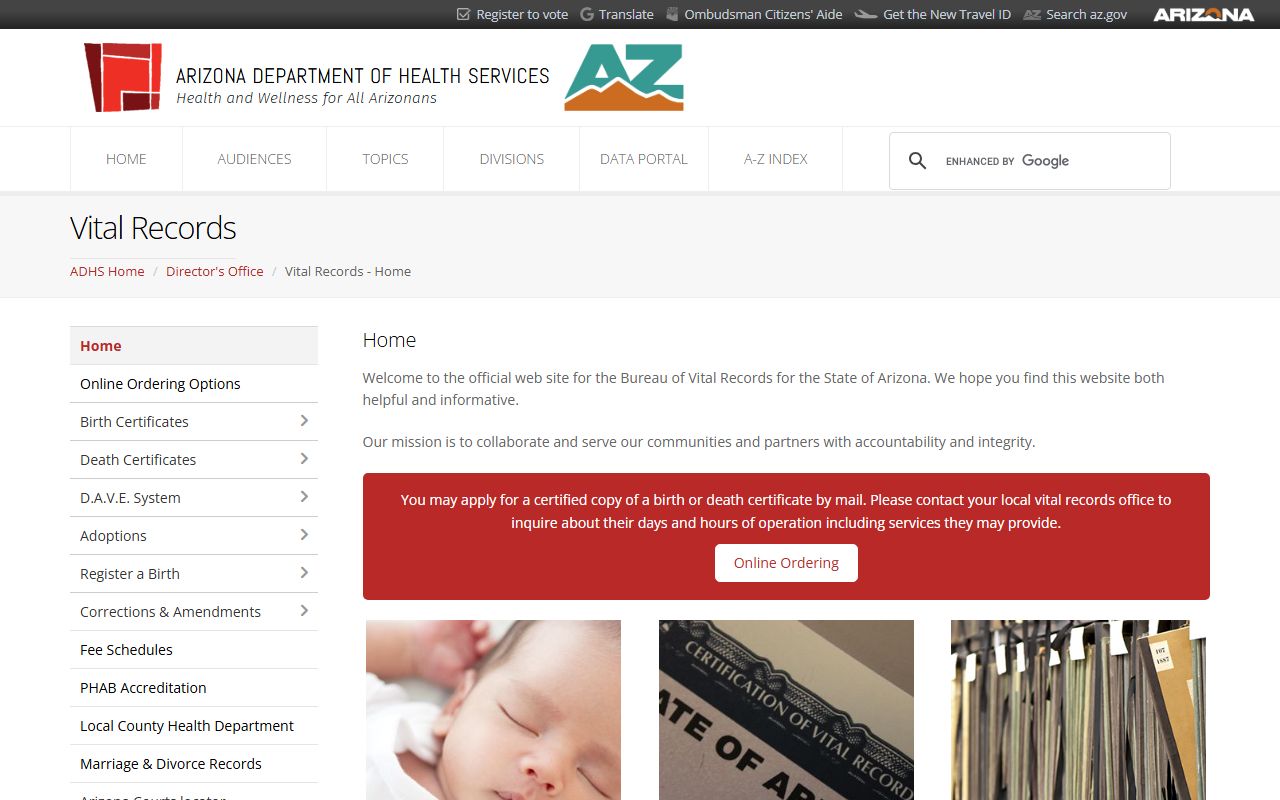
Note: The health department website directs all marriage inquiries to the Arizona Courts system.
Arizona Marriage License Requirements
Both people must appear together at the clerk's office. No exceptions. You cannot send someone else or apply by yourself first. Each person needs to bring valid government-issued photo ID. A driver's license works. So does a passport, state ID card, or military ID. Maricopa County also accepts Matricula Consular cards starting in 2021. The ID must show your name, photo, and date of birth clearly.
You must provide your Social Security number when you apply. The clerk keeps this separate from the public record. If you do not have a Social Security number, you can indicate that on the form. Foreign nationals without a number can still get married in Arizona. The clerk will note the situation in their files. This information goes to the Department of Economic Security for child support purposes only and is not released to others.
The minimum age to marry in Arizona is 18. Younger applicants face strict rules. Under ARS 25-102, a person who is 16 or 17 can marry only with parental consent or an emancipation order. The future spouse cannot be more than three years older. Anyone under 16 cannot marry at all. The clerk will refuse to issue a license that violates these rules.
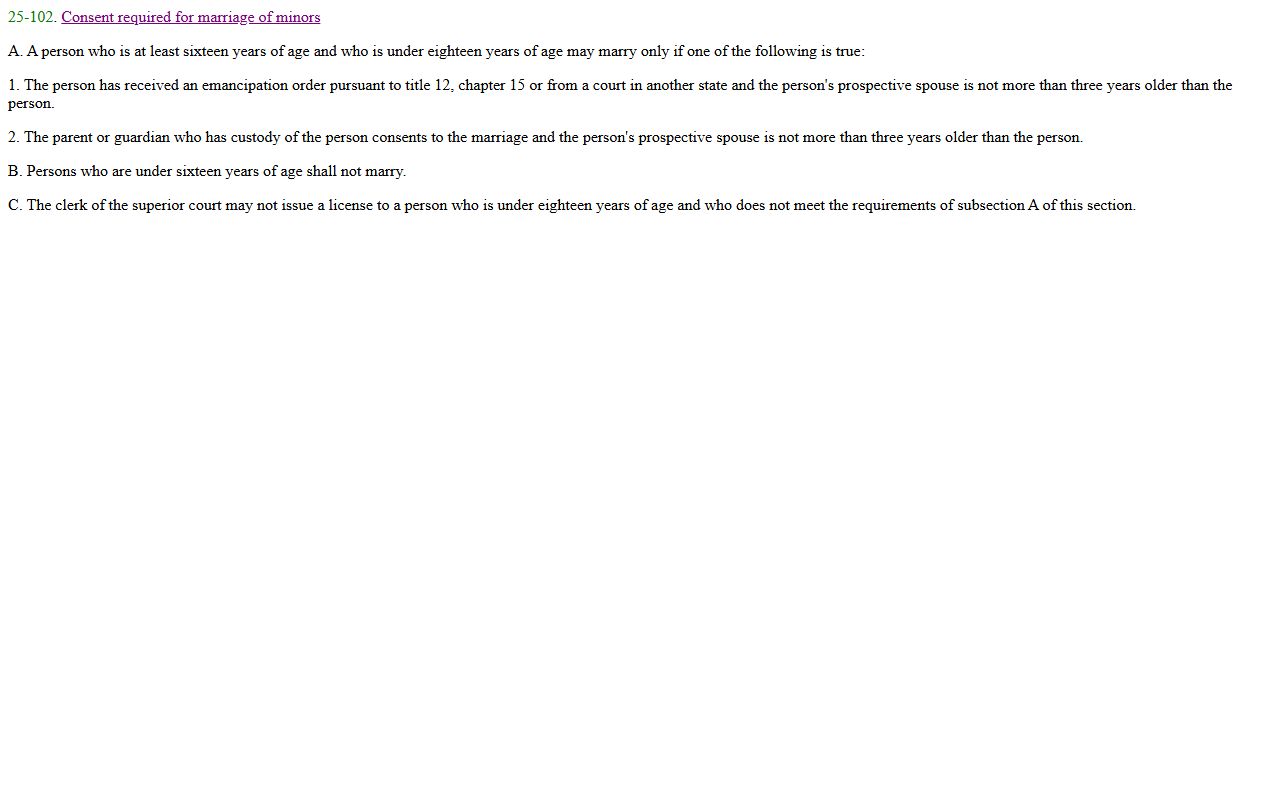
Arizona law lists certain marriages that are void from the start. ARS 25-101 bans marriages between close relatives. This includes parents and children, grandparents and grandchildren, siblings, aunts and nephews, uncles and nieces, and first cousins. First cousins can marry if both are 65 or older, or if one proves they cannot have children.
How to Apply for an Arizona Marriage License
Walk into any county clerk office during business hours. Ask for a marriage license application. You will complete an affidavit under oath. The affidavit asks for your name, age, and home address. It also includes a statement that you understand information about sexually transmitted diseases is available from the health department. Both applicants sign the form in front of the clerk.
The clerk reviews your application and IDs. If everything checks out, they issue the license on the spot. Most visits take 15 to 30 minutes. Some busy offices recommend appointments. Maricopa County lets you schedule online at their website. Walk-ins are still accepted at all locations. The license prints immediately and is ready to use right away.
Maricopa County also offers an online application for Arizona residents. You complete the forms at home and receive your license by mail. This takes longer but saves a trip to the office. The fee is the same plus $8 for postage. You still need to provide ID copies and sign the affidavit, which gets notarized before mailing.
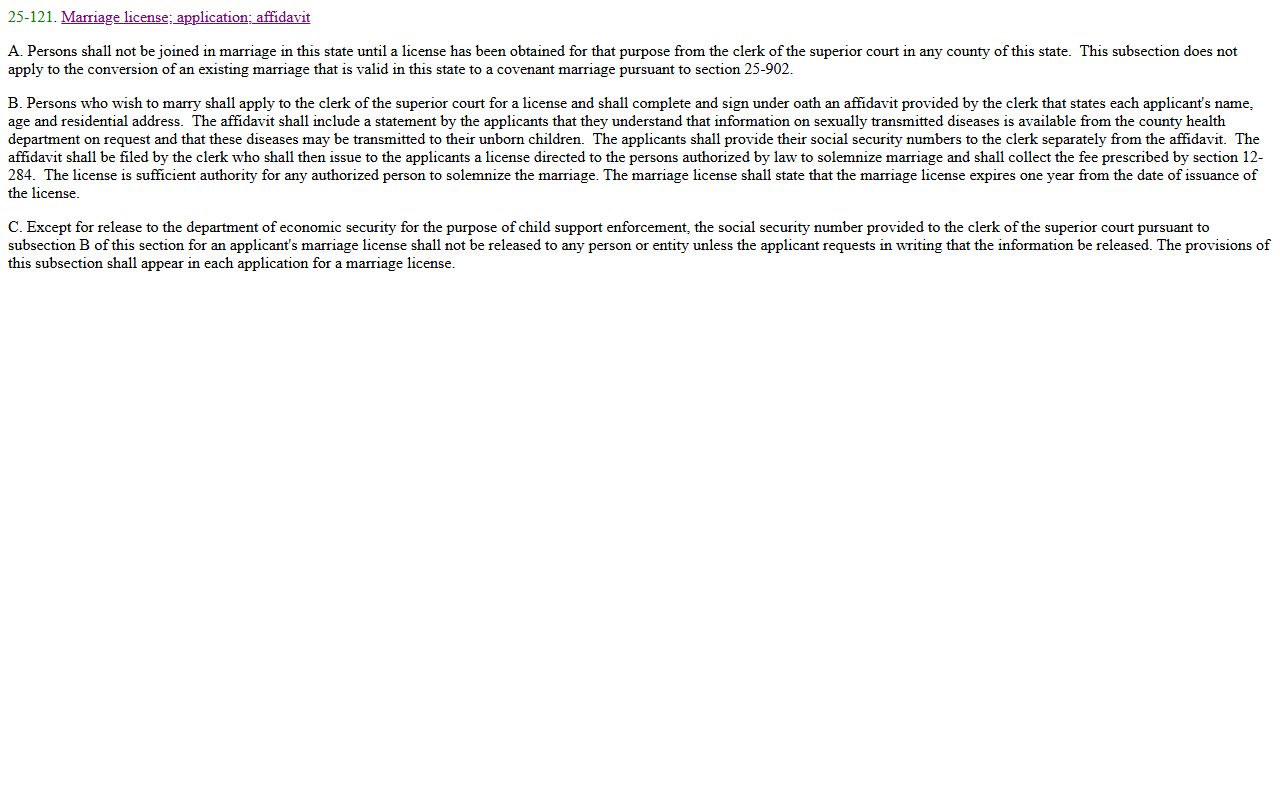
The Arizona Court Help website has step-by-step guides. It explains what to bring and what to expect. The site covers all 15 counties.
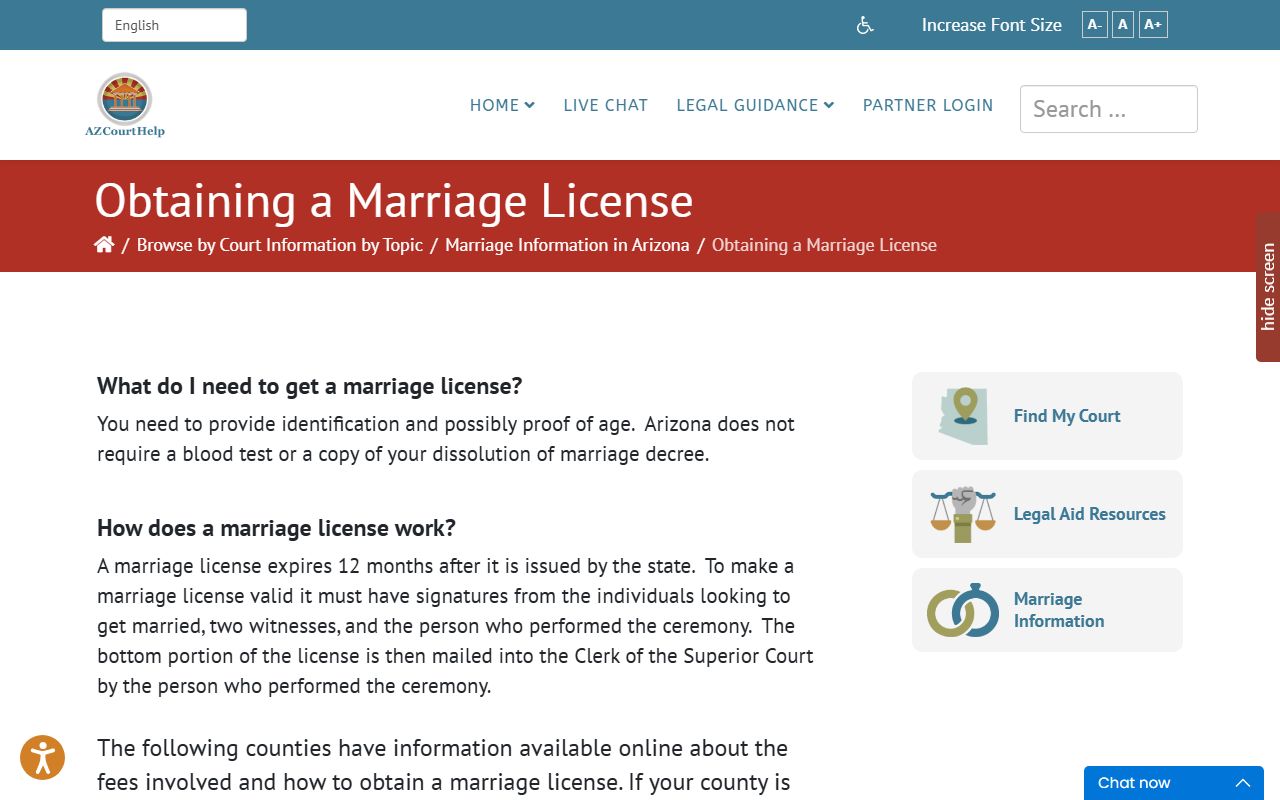
Marriage License Fees in Arizona
Fees range from $83 to $98 across Arizona counties. The exact amount depends on where you apply. Most larger counties charge $98. This includes Maricopa, Pima, Coconino, Mohave, Navajo, Pinal, Yavapai, and Yuma. Smaller counties like Graham, Greenlee, La Paz, and Santa Cruz charge $83. Some counties accept cash only at certain locations. Others take credit cards, debit cards, money orders, or checks.
Certified copies of your marriage license cost extra. The fee ranges from $30 to $43.50 depending on the county. Maricopa charges $43.50 for a certified copy or $35.50 if you provide a self-addressed stamped envelope. Most other counties charge $30 to $35. Add $7 to $8 for postage if you order by mail. You may need certified copies for name changes at the DMV or Social Security office.
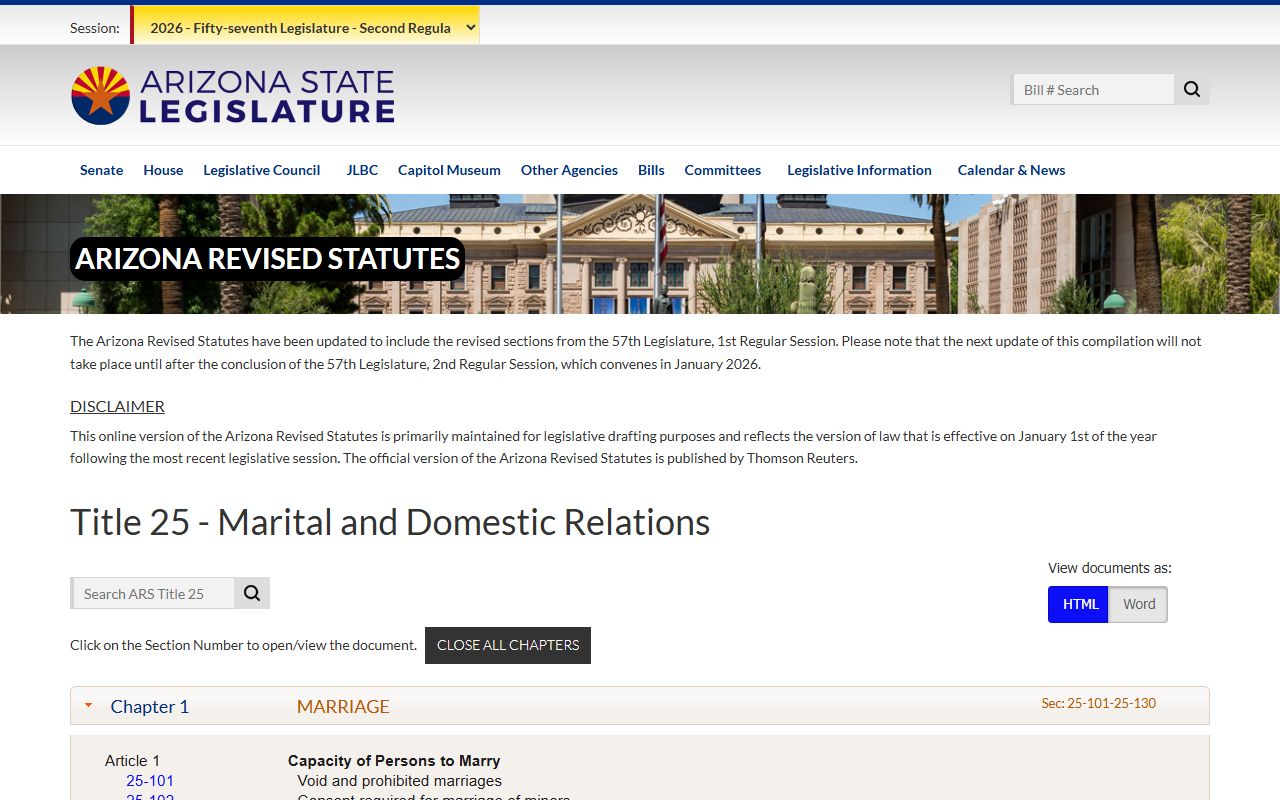
Covenant marriage is a special option in Arizona. It requires premarital counseling and creates a marriage with limited divorce options. Converting an existing marriage to covenant status costs $35. You need a notarized statement from your counselor. The Arizona Legislature Title 25 contains all the rules for covenant marriages in Chapter 7.
Marriage Ceremony Rules in Arizona
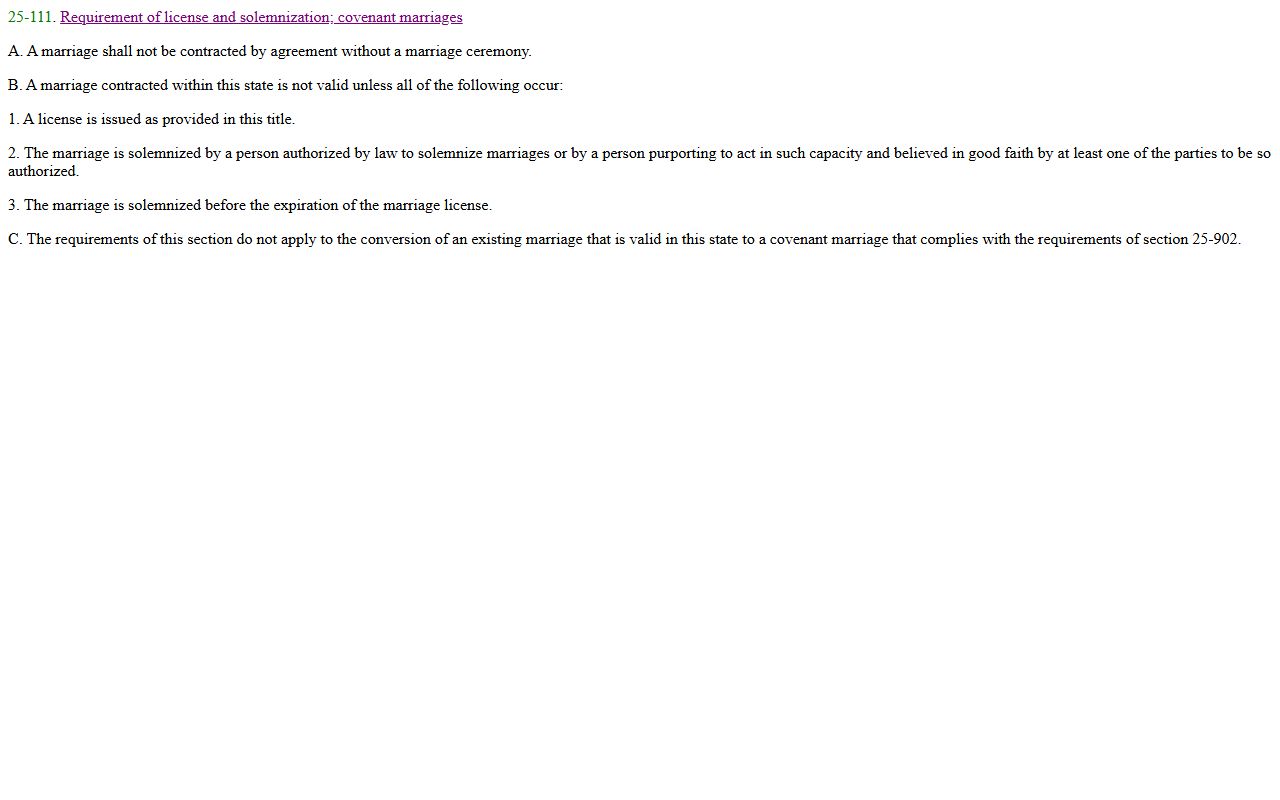
Arizona requires a ceremony to make your marriage valid. Getting the license is not enough. Under ARS 25-111, the marriage must be solemnized by an authorized person before the license expires. Without a proper ceremony, the marriage is not legally recognized.
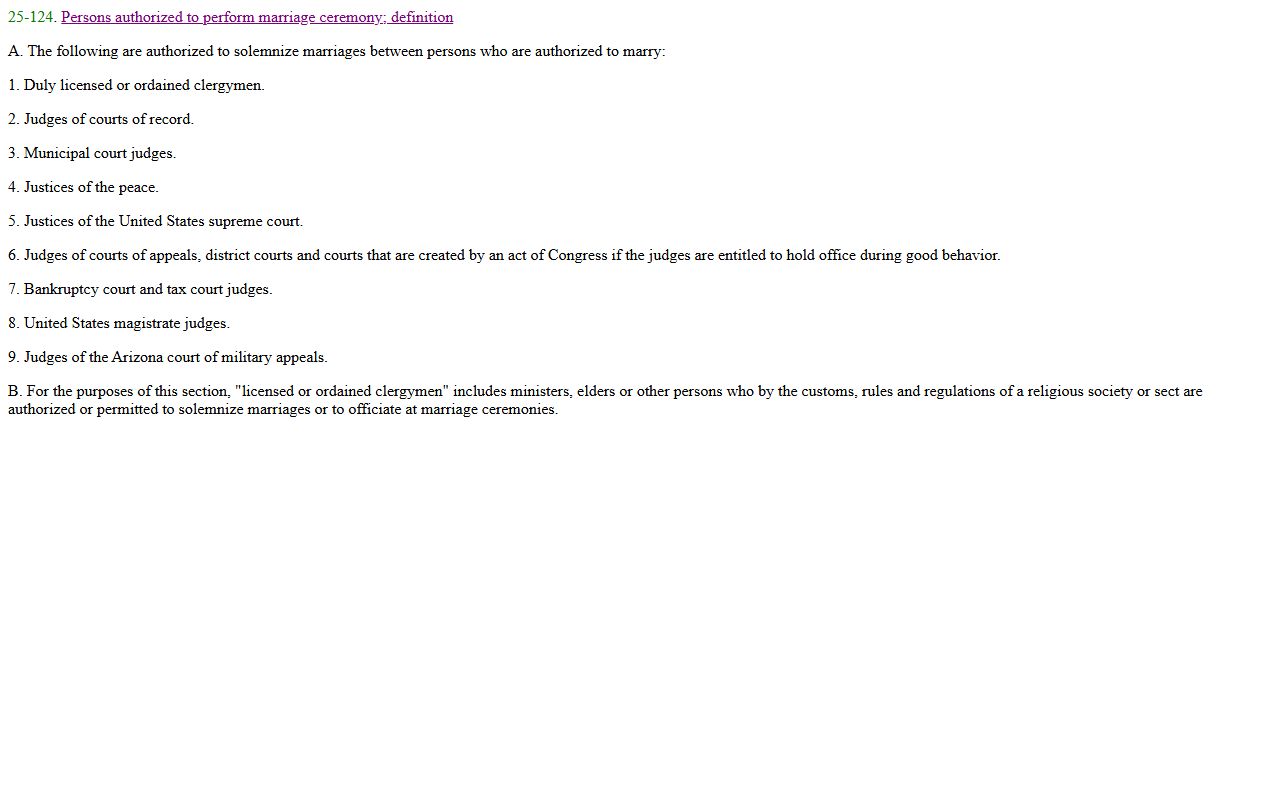
ARS 25-124 lists who can perform weddings in Arizona. Licensed or ordained clergy can officiate. This includes ministers, priests, rabbis, and other religious leaders. Judges of any court of record can marry people. Municipal court judges qualify. So do justices of the peace. Federal judges, bankruptcy judges, tax court judges, and magistrate judges can also perform ceremonies. Arizona Court of Military Appeals judges round out the list.
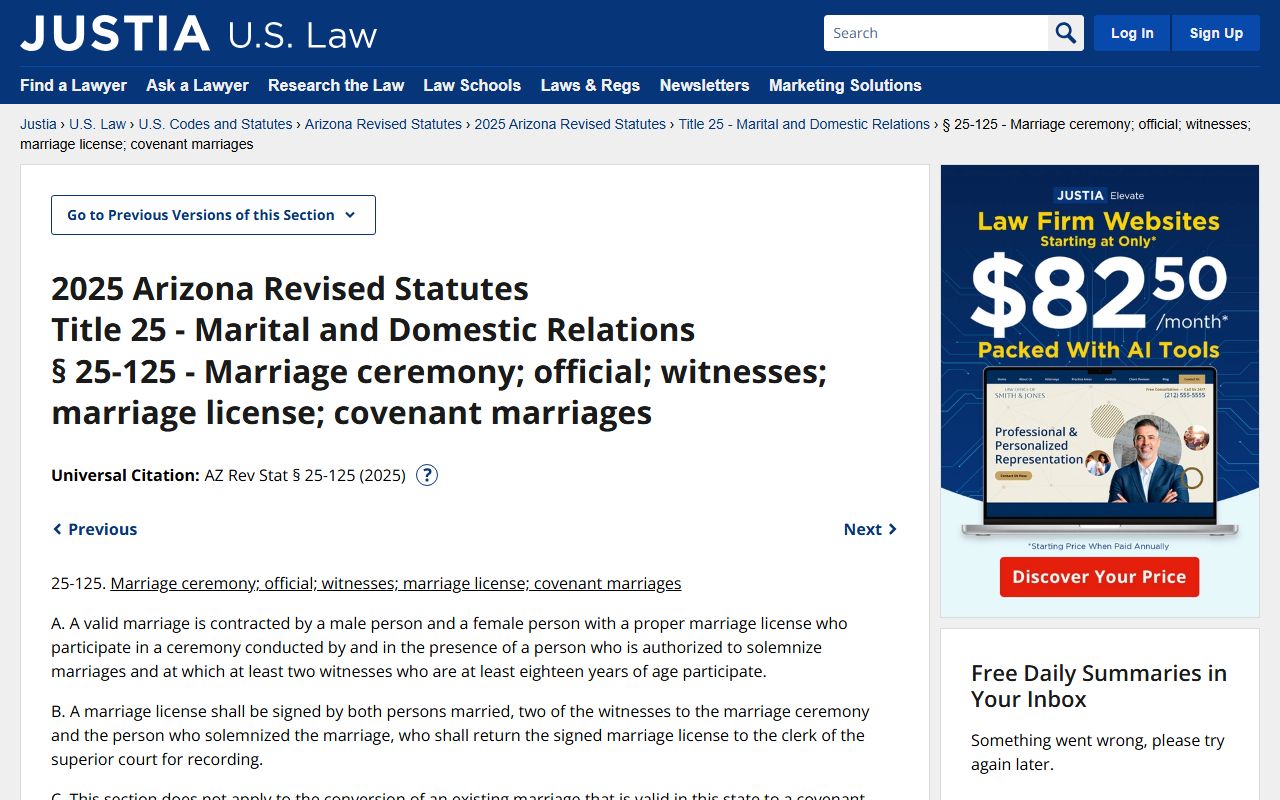
You need two witnesses at the ceremony. They must be at least 18 years old. The witnesses sign the marriage license after the ceremony along with both spouses and the officiant. Anyone can serve as a witness. Friends, family members, or even strangers can fill this role. Some courthouses provide witnesses if you do not bring your own.
After the wedding, the officiant must return the signed license to the Clerk of Superior Court. Most counties require this within 30 days. The clerk records the marriage and stores the original document. You can then request certified copies. The ceremony requirements in ARS 25-125 spell out these steps in detail.
Note: The clerk's office does not arrange wedding ceremonies for you in most counties.
Out-of-State Marriages and Arizona
Arizona recognizes marriages from other states and countries. ARS 25-112 says that marriages valid where they were performed are valid in Arizona too. The only exception is marriages that would be void under Arizona law, such as those between close relatives. If you got married in another state and move to Arizona, your marriage remains legal here.
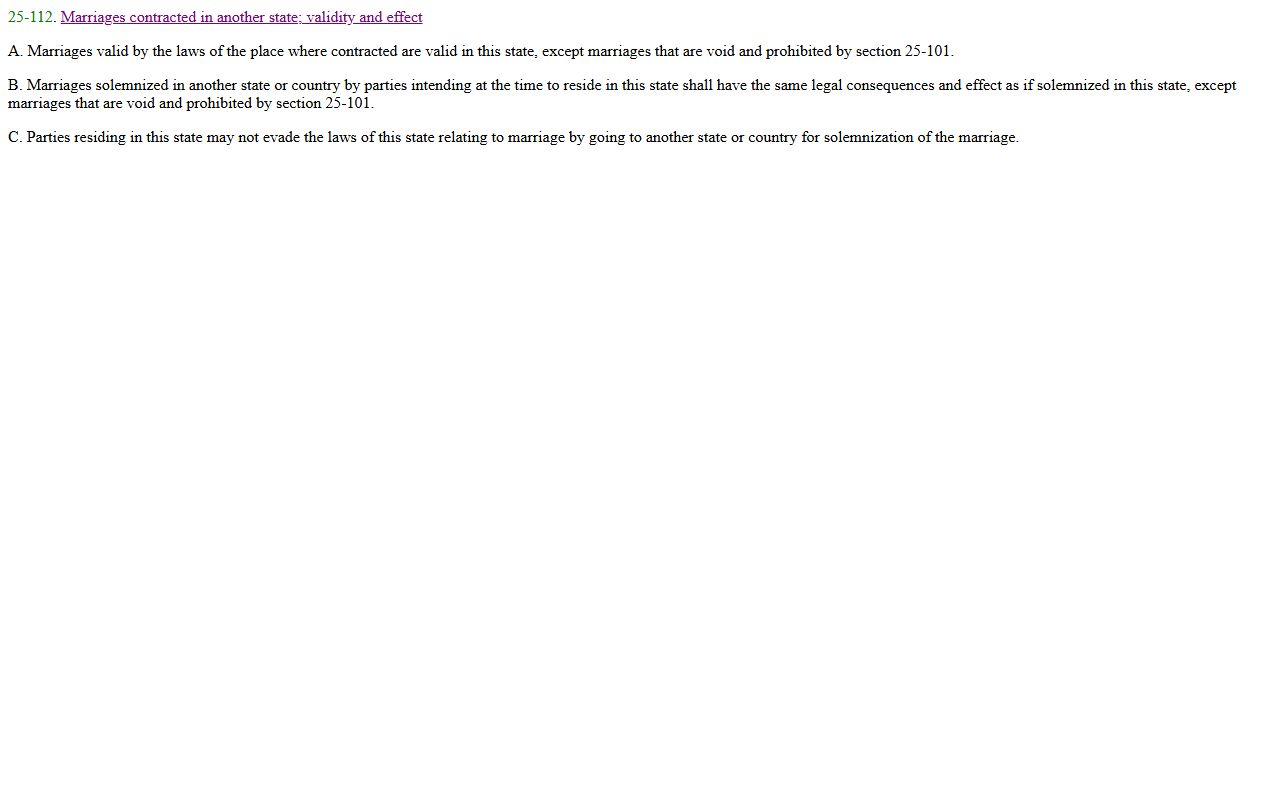
Couples who intend to live in Arizona but marry elsewhere face the same rules. The marriage carries the same legal weight as if it happened here. This matters for property rights, inheritance, and other legal issues. Arizona courts will honor the marriage from day one.
Prohibited Marriages in Arizona
Certain marriages are automatically void in Arizona. ARS 25-101 lists the relationships that cannot legally marry. The law blocks marriages between parents and children at any generation level. Siblings cannot marry whether they share one parent or both. Aunts and nephews cannot marry. Neither can uncles and nieces. First cousins face a general ban with two narrow exceptions.
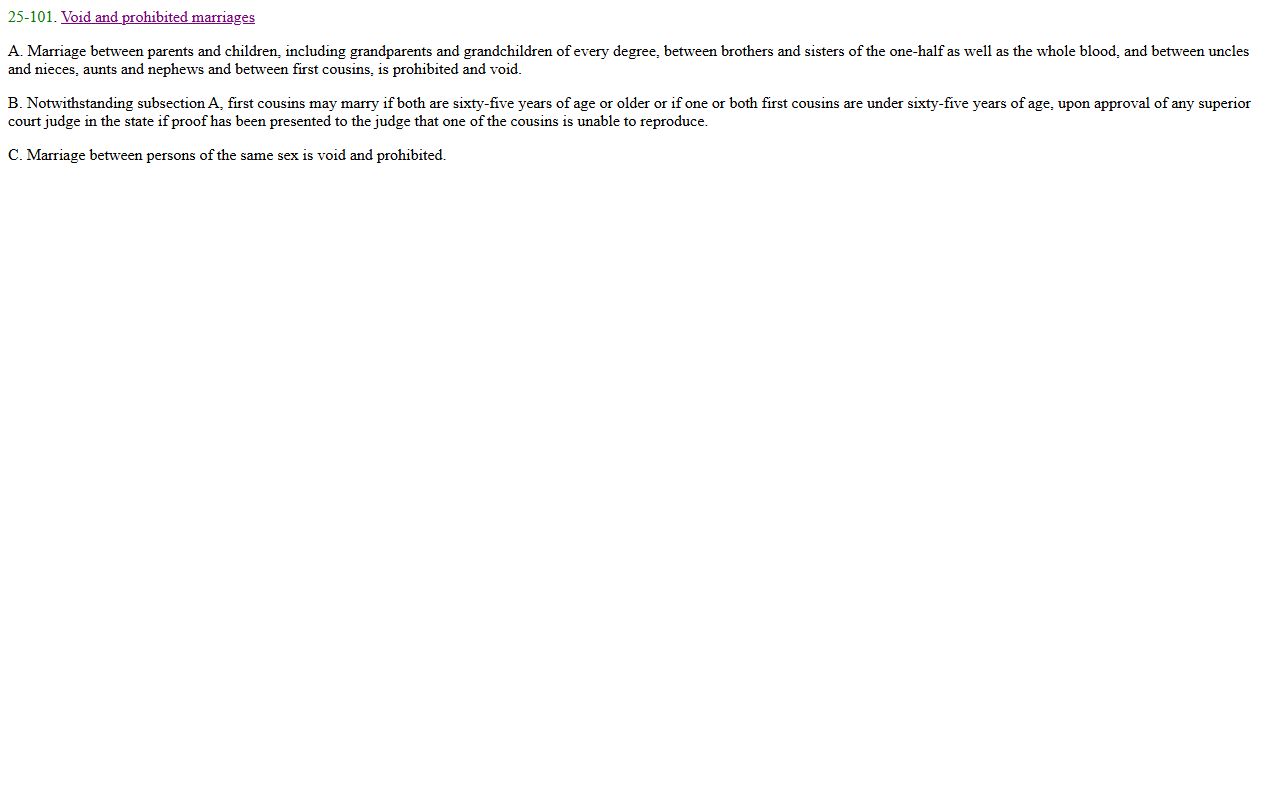
First cousins can marry if both are 65 or older. They can also marry at any age if one proves to a Superior Court judge that they cannot reproduce. The judge must approve the marriage before the clerk can issue a license. These cases are rare but the law does allow them under strict conditions.
A void marriage has no legal effect. It is as if the marriage never happened. The state does not need to annul it because it was never valid. This differs from a voidable marriage, which is valid until a court declares it void. Arizona takes these restrictions seriously. Clerks will refuse to issue licenses to couples who fall under the prohibited categories.
Courthouse Weddings in Arizona
Many Arizona counties offer wedding ceremonies at the courthouse. Justices of the Peace perform these weddings. The cost and availability vary by location. Maricopa County Justice Courts hold weddings after 5 p.m. on weekdays. The fee runs $100 to $120 depending on the judge. Some judges marry active military members for free during lunch hours.
Pima County offers no-cost weddings during business hours. Spots are limited each month. Spanish-language ceremonies are available on request. Private weddings outside the courthouse or via Zoom start at 5 p.m. and cost extra. Yuma County holds courthouse weddings starting at 5 p.m. for $100 cash. You must arrive by 4:15 p.m. to clear security. The court locks its doors at exactly 5 p.m.
Courthouse wedding requirements vary by county:
- Valid marriage license not yet expired
- Two witnesses age 18 or older
- Ceremony fee in cash at most locations
- Arrive early to allow time for security
- Some courts provide witnesses if needed
Call ahead to schedule. Some courts book up weeks in advance. Others can fit you in with short notice. Each judge sets their own schedule and policies.
Arizona Marriage License by County
Each county clerk office handles marriage licenses for that area. Pick a county below to find office locations, hours, fees, and contact information. All 15 Arizona counties issue marriage licenses to any couple regardless of residency.
Marriage Licenses in Major Arizona Cities
City residents apply at their county Clerk of Superior Court. Arizona cities do not issue marriage licenses directly. Pick a city below to learn which county office serves that area and find local wedding resources.